Ahvant Foundation
An Invocation for Net-Zero Transformation
Energy, buildings, industry, transport, water, and waste — six sectors that account for virtually all global greenhouse-gas emissions. In the fastest-urbanising regions — South Asia, sub-Saharan Africa, Southeast Asia, the Middle East — most of the infrastructure that will define 2050 has not yet been built.8
Ahvant Foundation works across all six sectors and four regions — closing the gap between climate ambition and measurable action, at every scale from a single structure to a national grid.
The Sectors That Will Define Net Zero
Five sectors account for the overwhelming majority of global greenhouse-gas emissions. Energy supply — electricity generation, heat, and fugitive emissions — produces 34% of the total; global energy-related CO₂ reached an all-time high of 37.8 Gt in 2024.2 Buildings and construction account for 37% of energy-related CO₂, with emissions reaching 10 Gt in 2023 — a level incompatible with climate goals.1 Industry — cement, steel, chemicals — contributes 24% of direct emissions, rising to 34% when electricity consumption is included; cement alone accounts for roughly 7% of all global CO₂.3 Transport is responsible for 15% of total GHG; emissions in emerging economies (excluding China) surged 18% since 2015, seven times the growth rate elsewhere.4 And the often-overlooked nexus of water and waste adds 3–4% of anthropogenic GHG directly and 18% of global methane, with solid waste projected to rise 73% by 2050.5
None of these can be addressed in isolation. A net-zero building connected to a coal-fired grid achieves little. Efficient cooling systems are irrelevant if the refrigerants they use destroy the ozone layer. Demand flexibility cannot function without the data infrastructure to measure and verify it. The transformation is systemic — or it does not happen at all.
The Scale of the Challenge
Between 3.3 and 3.6 billion people live in contexts highly vulnerable to climate change, predominantly in tropical and subtropical regions.7 Close to 90% of the 2.5 billion people projected to be added to urban areas by 2050 will be in Asia and Africa.8 Some 666 million people still lack electricity access — 85% of them in sub-Saharan Africa.9 Space cooling is the fastest-growing building energy demand; Southeast Asia's air-conditioner stock is set to grow ninefold by 2040.10 And 2.2 billion people lack safely managed drinking water, with the Middle East and North Africa the most water-stressed region on earth.6
In these regions, most of the buildings, grids, transport networks, water systems, and waste facilities that will be in service in 2050 have not yet been built. Over half of all new construction globally happens without any applicable energy code.11 This path dependency is both the gravest risk and the greatest opportunity: the infrastructure decisions made in the next decade will shape emissions trajectories for half a century.
Catalysing Action, Not Just Research
Ahvant Foundation works through specialised centres of practice — each focused on a critical dimension of the transformation. The centres do not merely study problems; they build the institutional architecture, professional capacity, and market mechanisms needed to solve them. Every programme is designed to move from evidence to implementation: training the workforce, shaping the regulation, piloting the technology, and measuring the result.
The current four centres address education and knowledge exchange, demand flexibility, sustainable cooling, and data analytics. As the Foundation grows, new centres will be added to cover emerging priorities — industrial decarbonisation, urban transport, circular economy — extending the same implementation-first approach to every sector that matters.
The Foundation focuses on tropical, arid, and monsoon climate zones — where rapid urbanisation, extreme heat, energy poverty, and water stress converge. These are the regions where net-zero decisions made today will have the greatest impact.
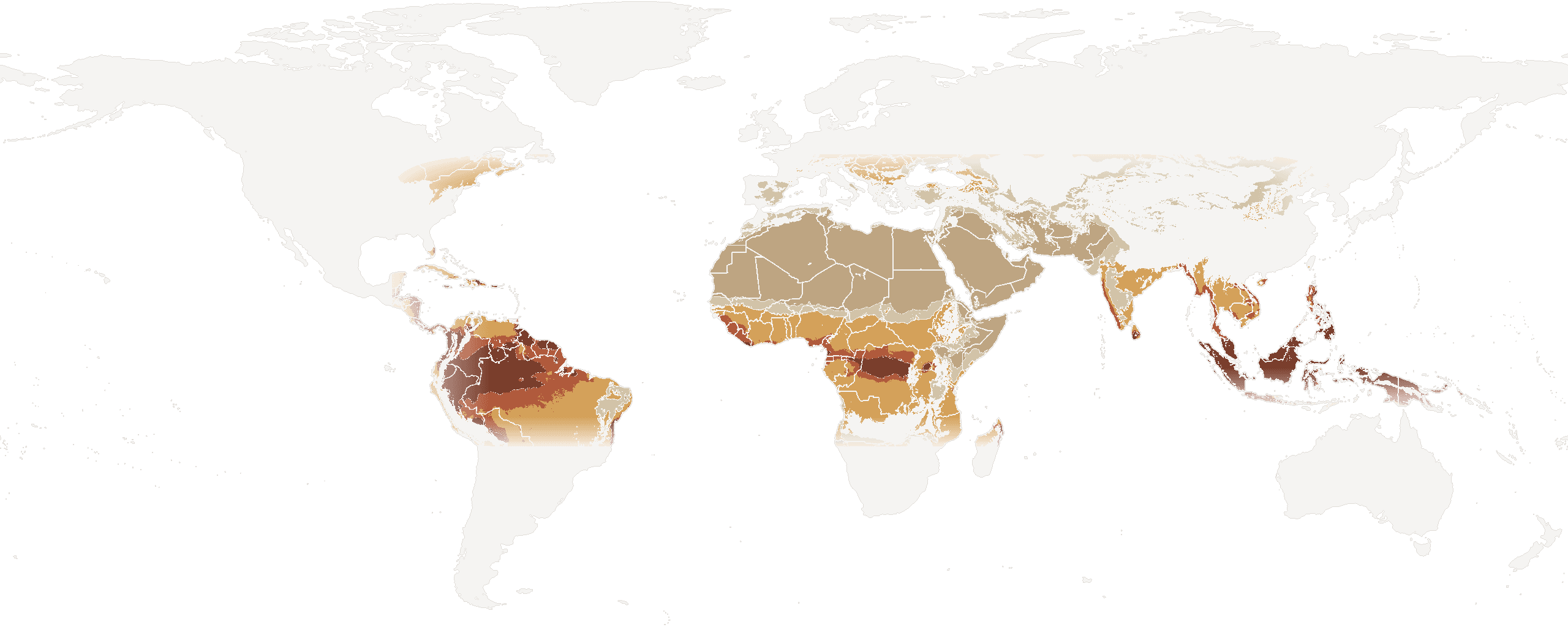
Based on Beck et al., “Present and future Köppen-Geiger climate classification maps,” Scientific Data, 2023. CC BY 4.0.
Sources & References
- 1.UNEP/GlobalABC, 'Global Status Report for Buildings and Construction,' 2024/2025. The buildings and construction value chain accounts for 34% of global energy demand and 37% of energy-related CO₂ emissions. Global CO₂ from buildings reached 10 Gt in 2023.
- 2.IEA, 'Global Energy Review,' 2025; IPCC AR6, Working Group III, 2022. Energy supply accounts for 34% of total global GHG emissions. Global energy-related CO₂ hit an all-time high of 37.8 Gt in 2024.
- 3.IPCC AR6, Working Group III, 2022; UNECE, 2022. Industry accounts for 24% of direct global GHG emissions (34% when indirect electricity and heat are included). Cement alone contributes roughly 7% of all global CO₂.
- 4.IEA, 'Breakthrough Agenda Report,' 2025. Transport accounts for 15% of total global GHG. Road-sector emissions exceeded 6 Gt CO₂ in 2024. Transport emissions in emerging economies (excl. China) surged 18% since 2015.
- 5.World Bank, 'What a Waste 2.0,' 2018; IPCC. Waste contributes approximately 3–4% of global anthropogenic GHG and 18% of global methane. Solid waste generation is projected to rise 73% to 3.88 billion tonnes by 2050.
- 6.UNESCO/UN-Water, 'World Water Development Report,' 2024. 2.2 billion people lack safely managed drinking water. The Middle East and North Africa is the most water-stressed region, with 83% of its population exposed to extremely high stress.
- 7.IPCC AR6, Working Group II, 2022. Between 3.3 and 3.6 billion people live in contexts highly vulnerable to climate change, predominantly in tropical and subtropical regions.
- 8.UN DESA, 'World Urbanization Prospects,' 2018. Close to 90% of the 2.5 billion people projected to be added to urban areas by 2050 will be in Asia and Africa.
- 9.IEA/World Bank, 'Tracking SDG7: Energy Progress Report,' 2025. 666 million people lack electricity access; sub-Saharan Africa accounts for 85% of the global deficit (565 million people).
- 10.IEA, 'The Future of Cooling in Southeast Asia.' Space cooling is the fastest-growing building energy demand (~4% annually). Southeast Asia's air-conditioner stock is set to grow ninefold by 2040.
- 11.UNEP/GlobalABC, 2024/2025. Over half of all new construction globally happens without any applicable energy code. 80% of floor-area growth is in emerging and developing economies.